Fewer Resources, Sharper Results: The Unexpected Power of Building Under Pressure

Somewhere between the fourth sprint planning meeting and the seventh stakeholder review, something gets lost. Not maliciously. Not even noticeably, at first. It just quietly disappears under the weight of process, budget, and the particular kind of creative paralysis that comes from having too many options.
We've seen it play out again and again. A business with serious money to spend hands a project to a well-resourced agency. Months pass. The brief expands. Features multiply. And eventually, something launches that technically does everything it was supposed to — but somehow connects with nobody.
Meanwhile, a small team in a market town, working with a fraction of the budget and half the time, ships something that actually works. Something people use. Something that grows.
That's not a fluke. That's the constraint effect in action.
The Problem With Infinite Runway
Unlimited resources are, paradoxically, terrible for decision-making. When you can afford to build everything, you often end up building the wrong things — just very expensively.
The pattern is well-documented in product development circles, but it's particularly visible in digital agency work. A large budget creates permission to defer hard choices. Why decide between two approaches when you can prototype both? Why cut a feature when there's still time in the sprint? Why interrogate whether users actually need something when it's already half-built?
The result tends to be platforms that are technically impressive and practically exhausting. Feature-bloated CMS builds that nobody on the client team knows how to update. Custom dashboards that track seventeen metrics when the business only ever looks at two. Integrations that made sense in a workshop six months ago and now just sit there, quietly breaking things.
There's a word for this in the industry: gold-plating. And it happens not because agencies are incompetent, but because they had the budget and the time to keep going when they should have stopped.
What Happens When You Can't Afford to Overthink
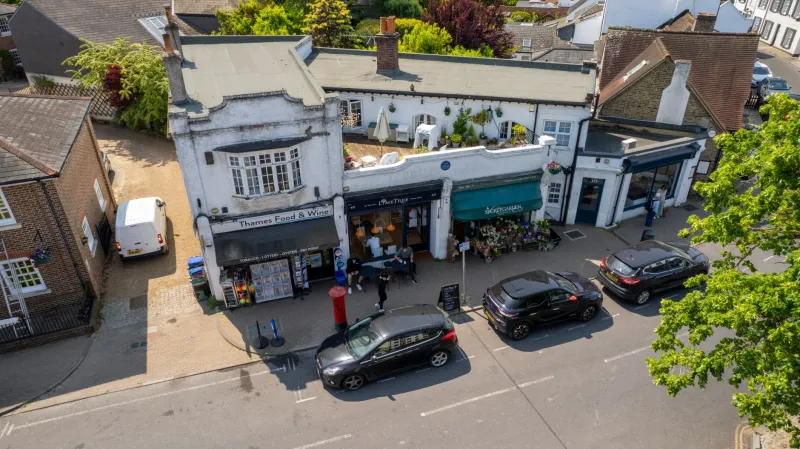
Small regional agencies — the kind you find in places like Dorking, Guildford, or Shrewsbury rather than Shoreditch — tend to operate in a fundamentally different mode. Not by choice, initially. By necessity.
When your team is small, your margin is tight, and your client is a local SME with genuine constraints of their own, you can't afford to build something complicated. You have to build something right.
That pressure produces a kind of discipline that's actually quite hard to manufacture artificially. You ask harder questions earlier. You challenge briefs more robustly. You say 'do you actually need this?' more often — and you mean it.
Consider a Surrey-based e-commerce business that came to a regional agency with a list of forty-odd feature requests. A London agency might have quoted for all forty and built a project plan to match. The regional team, knowing the budget wouldn't stretch, sat down with the client and asked which five of those features would actually move the needle on sales.
They built those five. Properly. With real care for performance, usability, and the specific behaviour of that client's customer base. The result outperformed the client's previous platform — built by a larger agency with a much bigger scope — within three months of launch.
That's not a coincidence. That's forced minimalism doing what it does best.
Geography as a Focusing Lens
There's something else worth naming here, and it's slightly uncomfortable for the industry to admit: being close to your client changes the quality of your thinking.
Not because proximity makes you smarter. But because when you're working with businesses you actually bump into at the local business breakfast, or whose owners you might see at the farmers' market on a Saturday, the stakes feel different. You're not delivering a project and moving on. You're building something in your own backyard.
That accountability sharpens everything. It makes you less likely to recommend a solution you don't fully believe in. Less likely to over-engineer something when a simpler approach would serve the client better. Less likely to chase the impressive-looking deliverable at the expense of the genuinely useful one.
Regional agencies don't often talk about this as a competitive advantage — perhaps because it sounds a bit soft. But it's real, and it shows up in the work.
Minimalism Isn't Laziness — It's Craft
There's a tendency to conflate 'doing less' with 'not trying hard enough.' That's worth pushing back on.
Building a lean, focused digital product is genuinely harder than building a sprawling one. It requires you to make decisions rather than defer them. To understand what a business actually needs rather than what it thinks it wants. To hold the line on scope when clients inevitably ask for more.
The best digital products — the ones that age well, that users actually return to, that businesses can maintain without specialist support — tend to be the ones where someone, at some point, said 'no' to something. Where a constraint forced a clearer question, and a clearer question produced a more honest answer.
This is something the big-budget agency world has largely forgotten, or perhaps never had to learn. When you've always had the runway to add more, the instinct to subtract never develops.
What This Means If You're Commissioning a Digital Project
If you're a UK business owner thinking about a new website, platform, or digital tool, here's a genuinely useful reframe: don't lead with your wish list. Lead with your actual problem.
Ask any agency you're speaking to what they'd remove from your brief, not just what they'd build. Ask them to tell you what you don't need. If they can answer that question confidently and honestly, you're probably in good hands.
And if you're working with a tighter budget than you'd like — don't treat that purely as a limitation. Treat it as a filter. It'll strip out the noise and leave you with something that actually does the job.
The best digital work we see coming out of regional agencies across the UK right now isn't happening despite the constraints. It's happening because of them.
Sometimes the sharpest tool in the shed is the one that's been worn down to exactly the right edge.