Close Enough to Care, Far Enough to Think Clearly: The Quiet Advantage of Not Being in London
Here's something the London agency world doesn't particularly want you to think about: proximity isn't the same as understanding.
For years, the assumption has been that if you want serious digital work done, you hire someone who can make it to a Soho lunch meeting by half twelve. The closer the agency, the logic goes, the better they'll 'get' you. But there's a problem with that thinking — and it's one that businesses across the South East are slowly waking up to.
Being too close to something doesn't always make you better at seeing it. Sometimes it makes you worse.
The Geography of Good Work
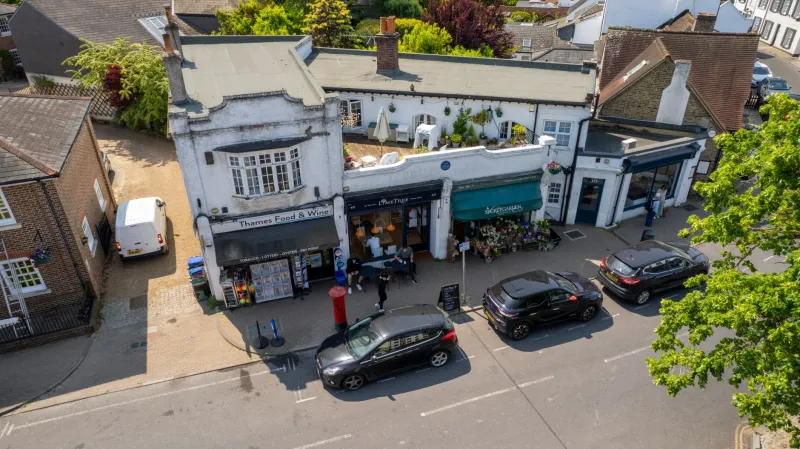
Dorking sits about 23 miles south-west of central London. That's close enough for a day trip, close enough to understand the capital's rhythms, and close enough to serve clients who operate in and around the M25 corridor. But it's also far enough to breathe.
That breathing room matters more than it sounds.
When you're based in the thick of London's agency scene, you're constantly absorbing its aesthetics, its trends, its obsessions. Every pitch starts to look the same. Every website ends up chasing the same Shoreditch-approved design language — heavy sans-serifs, brutalist grids, hero sections that look spectacular on a portfolio and absolutely baffle a 54-year-old business owner in Guildford trying to find a phone number.
Agencies outside the capital don't have that problem. Not because we're behind the curve — we're not — but because we're not swimming in the same current. We can look at a client's actual audience, in their actual location, and design for them rather than for the next D&AD entry.
What 'Local' Actually Means for Digital Work
There's a version of 'local' that means you share a postcode. And then there's a version that means you genuinely understand the market.
A Surrey-based agency working with a hospitality business in Reigate, a solicitor in Horsham, or a manufacturer in Crawley isn't just geographically convenient — it's culturally calibrated. We know what drives footfall in these towns. We understand the difference between marketing to commuter-belt professionals and marketing to people who've lived in the same village for three generations. We know which local directories still matter, which community Facebook groups carry real commercial weight, and why a testimonial from someone in Leatherhead means more to a potential customer in Epsom than a glowing review from a faceless enterprise client.
That kind of knowledge isn't on any briefing document. You can't Google it. You absorb it by being part of the same economic ecosystem.
The Premium Paradox
Here's where it gets interesting from a commercial standpoint.
London agencies — particularly those in the more fashionable postcodes — carry significant overhead. Office space alone in EC1 or W1 can run to extraordinary sums, and clients end up paying for that whether they realise it or not. The rate card for a mid-sized London agency can be eye-watering, and not always because the work is better. Sometimes it's just because the agency needs to cover its rent.
Regional agencies like ours operate differently. Lower fixed costs mean more competitive day rates, which means clients get more actual work for their budget rather than more slides in a pitch deck. And because we're not constantly churning through clients to hit metropolitan revenue targets, we can afford to invest properly in long-term relationships.
One of our clients — a family-run building materials supplier based in Surrey — told us something that's stuck. They'd previously worked with a London agency who, in their words, 'always seemed to be presenting to us rather than working with us.' Every meeting felt like a performance. Every update came with a new proposal for additional spend. When they moved to a regional agency, the whole dynamic changed. Less theatre, more progress.
That's not a coincidence. It's a structural difference in how regional agencies operate.
Trust Is Built on the Ground, Not on LinkedIn
There's another dimension to this that rarely gets discussed in agency marketing — the social trust that comes from being genuinely embedded in a place.
When a business owner in Dorking or Reigate recommends an agency to someone they know, that recommendation carries a particular weight. It's not a LinkedIn endorsement from someone they met at a conference. It's a conversation at the farmers' market, or a word put in at the local business networking group, or a referral passed on through the kind of quiet professional networks that keep regional economies ticking.
That kind of trust is slow to build and very hard to fake. It's also enormously durable. Clients who come to us through community referral tend to stay far longer and engage far more deeply than those acquired through paid search or cold outreach. They arrive already trusting us, which means we can skip the lengthy courtship phase and get straight to doing good work.
The 'Close Enough' Calculation
None of this means that geographic proximity is irrelevant. It clearly matters — just not in the way people assume.
What clients actually need isn't an agency around the corner. What they need is an agency that can reach them when it counts: for a site launch, a crisis, a strategic review, or one of those conversations that genuinely needs to happen in person rather than on a video call. Dorking's location makes all of that entirely practical. We're within easy reach of most of the South East, and London itself is less than an hour away on the train.
What we're not doing is charging London prices for that accessibility. And we're not bringing London assumptions to briefs that deserve to be understood on their own terms.
Why This Matters Right Now
The pandemic reshuffled a lot of assumptions about where work gets done and who you need to do it. Businesses that once felt obligated to hire London agencies because that's simply what you did have spent the last few years discovering that remote-first relationships can work brilliantly — and that the agencies who were already operating outside the capital were, in many ways, ahead of the curve.
The question isn't really about geography at all. It's about fit, understanding, and value. And on all three of those fronts, being based in a place like Dorking — genuinely connected to the communities we serve, free from metropolitan overhead, and clear-eyed enough to design for real people rather than industry peers — turns out to be a significant advantage.
Not despite the postcode. Because of everything that postcode represents.
Sharp digital craft from the heart of Surrey. Turns out that's not just a tagline — it's a business model.