Lost in Translation: The Hidden Cost of Business Systems That Can't Speak to Each Other
Photo: Flowerpowershower, CC BY-SA 4.0, via Wikimedia Commons
Picture this. A new customer places an order through your e-commerce platform. Someone in the office spots it, manually copies the details into your CRM, fires off an invoice in your accounting software, and updates a spreadsheet that nobody remembers creating but everyone is now terrified to delete. The order ships. The customer is happy. And your team has just spent twenty minutes doing something a properly configured API could handle in about three seconds.
Multiply that by every order, every new contact, every stock update, every payment received. Now you're not talking about twenty minutes — you're talking about thousands of pounds of staff time evaporating into thin air every single year.
This is the API integration problem, and it's far more common across Surrey and the wider UK than most business owners realise.
What Even Is an API, and Why Should You Care?
API stands for Application Programming Interface, which sounds intimidating but is really just a way for two pieces of software to have a conversation. When your accounting software knows a payment has landed the moment it happens in your payment gateway, that's an API doing its job. When your stock levels update automatically after a sale, same thing.
The problem isn't that APIs are difficult to understand. The problem is that most business software is sold in isolation. Your CRM vendor wants you using their CRM. Your e-commerce platform wants you living inside their dashboard. Nobody is particularly incentivised to make sure everything plays nicely together — that's usually left to you, or to whoever built your website, or to a spreadsheet that Gary from accounts set up in 2019.
When those connections don't exist, or when they're bodged together poorly, you end up with data silos. Each system has its own version of the truth, and reconciling them becomes a job in itself.
The Real-World Cost of Disconnected Systems
Let's get specific, because vague warnings about "inefficiency" don't really land until you see what it looks like in practice.
Imagine a local trade business with a decent website, a popular CRM, and Xero for their books. Every time a lead comes in through the website contact form, someone manually creates a record in the CRM. When that lead converts, someone manually raises an invoice in Xero. When the invoice is paid, someone manually marks the CRM record as a customer. Three manual steps, each with its own opportunity for a typo, a missed field, or simply being forgotten during a busy week.
Or consider a small retailer running WooCommerce alongside a warehouse management system that doesn't connect to it directly. Every morning, someone exports a spreadsheet from one and imports it into the other. If they're off sick, it doesn't happen. If the export format changes slightly after a plugin update, the import breaks. If someone makes a manual adjustment in one system and forgets to reflect it in the other, the stock count drifts — and sooner or later, you're selling something you don't actually have.
These aren't edge cases. This is Tuesday morning for a significant chunk of UK small businesses.
Where It All Goes Wrong
Poor API integration tends to happen for a few predictable reasons.
The first is platform sprawl. Businesses adopt tools one at a time, often choosing whatever solves the immediate problem cheapest. Over several years, you end up with a collection of software that was never designed to work together and nobody has ever sat down to properly join up.
The second is the "it works, don't touch it" mentality. Once a manual process becomes routine, it becomes invisible. Staff stop questioning why they're copying data from one screen to another because they've always done it that way. The cost never appears on a single invoice, so it never gets scrutinised.
The third — and this one stings — is cheap or rushed website builds. When a web agency focuses purely on getting a site live and looking good, the deeper question of how it connects to your existing business infrastructure often gets skipped entirely. The integration conversation should happen before a single line of code is written. Too often, it happens eighteen months later when someone finally notices the chaos.
What Good Integration Actually Looks Like
A properly thought-through API strategy doesn't mean rebuilding everything from scratch. It means mapping out what data needs to flow where, and making sure those flows are automated, reliable, and auditable.
When a lead submits a form on your website, they should appear in your CRM automatically — tagged correctly, assigned to the right person, with a follow-up task created. When they become a customer, your accounting software should know. When they make a purchase, your stock system should update. When they email in, your support tool should be able to show your team their entire history at a glance.
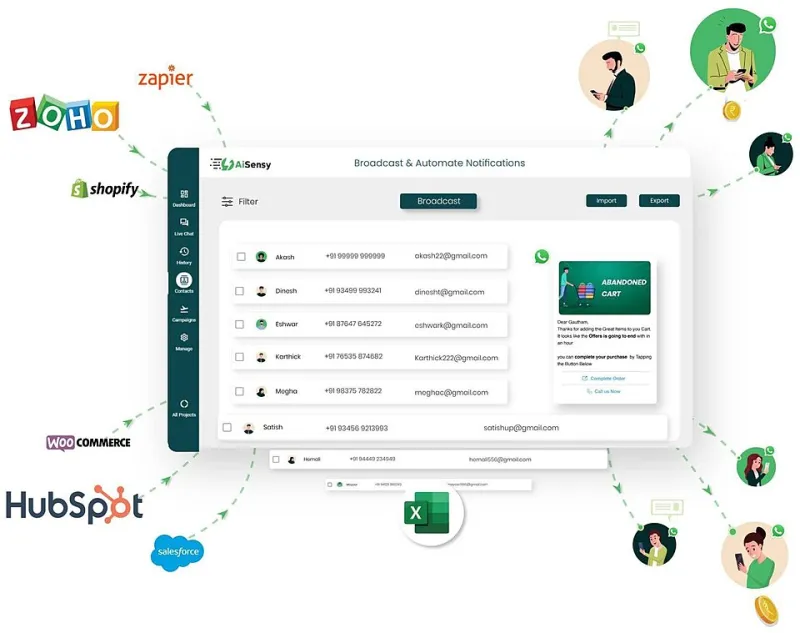
This isn't futuristic stuff. Tools like Zapier and Make (formerly Integromat) can handle lighter integration needs without custom development. For anything more complex — particularly where reliability and data integrity really matter — proper custom API work is worth the investment. Either way, the return on that investment tends to show up fast when you're no longer paying people to be human copy-paste machines.
Auditing What You've Got
If you're not sure where your business stands, start with a simple exercise. List every piece of software your business uses regularly. Then ask: which of these need to share data with each other? For each pair, ask whether that sharing is currently automatic or manual.
Every manual step on that list is a cost, a risk, and a candidate for automation. Prioritise by volume — the processes that happen most often are the ones where fixing the integration will pay back quickest.
Then have an honest conversation with whoever built or manages your website. Do they understand how your back-office systems work? Have they ever asked? If the answer is no, that's worth addressing sooner rather than later.
Getting the Conversation Started
At WebDorking, this is exactly the kind of problem we find genuinely interesting — partly because it sits at the intersection of technical craft and real business impact, and partly because the solutions are so often more achievable than clients expect.
The businesses that get this right don't necessarily have bigger budgets. They just stopped treating their website as a standalone thing and started thinking of it as one part of a connected system. That shift in thinking changes everything.
Your systems don't have to keep talking in different languages. Sometimes all it takes is the right interpreter.