Why the Best Web Agency for Your Business Might Not Be in London
There's a particular kind of snobbery in the UK tech industry. It's rarely spoken aloud, but it shapes decisions all the time. A business owner in Guildford opens a browser, types 'web agency', scrolls past the perfectly capable studios operating ten miles away, and books a discovery call with a Clerkenwell outfit whose website looks like it was designed by someone who exclusively eats at Ottolenghi. Nothing wrong with Ottolenghi. But you get the idea.
The assumption — stubborn, persistent, mostly wrong — is that geography equals quality. That the closer you are to a Zone 1 postcode, the sharper the thinking. And if you're somewhere like Dorking? Well. Lovely town. Nice Box Hill. Probably not where you'd go hunting for world-class digital talent.
We'd respectfully disagree.
The Overhead Problem Nobody Talks About
Let's start with money, because it's always about money eventually. A mid-sized London agency carries costs that have nothing to do with the quality of work they produce. Office space in EC1 or SE1 isn't cheap. Neither is the talent retention game in a city where every agency is fishing in the same recruitment pool and someone's always offering a slightly better package.
Those costs get passed on. Sometimes transparently, often not. You're not just paying for a website — you're subsidising someone's Farringdon rent and the ping-pong table in the breakout area.
Agencies operating in Surrey and the wider South East carry fundamentally different cost structures. That doesn't mean they're cheaper in a race-to-the-bottom sense. It means more of what you spend actually goes towards the work. The strategy. The code. The craft. There's a meaningful difference between affordable and cheap, and the best regional agencies have figured out how to sit comfortably in the first camp without ever touching the second.
Relationships Over Rolodexes
Here's something a London agency pitch deck won't tell you: in a smaller professional community, reputation is everything. There's no hiding behind a polished brand and a rotating cast of account managers. When an agency operates in a town where the clients, the suppliers, the local business network, and the school run all overlap, the incentive to do genuinely good work isn't just professional — it's personal.
This isn't a small thing. It fundamentally changes how client relationships work. You're not a ticket in a project management system. You're someone whose business the agency actually cares about, partly because they'll bump into you at the farmers' market and partly because your success is, in a very real sense, their reputation walking around town.
The relationship-driven model that smaller agencies operate on tends to produce better briefs, more honest conversations, and work that actually fits the client rather than work that fits the agency's portfolio aesthetic. That's harder to quantify than an NPS score, but ask any business owner who's been through both experiences and they'll tell you which one felt more like a partnership.
The Remote Work Recalibration
The pandemic didn't just change where people work — it changed what clients expect from their agencies. The idea that meaningful collaboration requires everyone to be in the same glass-fronted office in Southwark has been thoroughly dismantled. Zoom calls, shared Figma files, Slack threads: the tools that London agencies were already using to manage their remote teams are the same tools a Surrey studio uses to work with clients anywhere in the country.
The geographic advantage that big-city agencies once held — the ability to walk into a meeting room together — is largely gone. What's left is the work. And on that level playing field, smaller agencies with tight teams, low staff turnover, and genuine domain expertise are competing very effectively.
Some are doing more than competing. They're winning pitches against agencies three times their size, because the client eventually realises that a senior developer who's been with the studio for six years is more valuable than a rotating junior team managed by an account director who joined last month.
Slower Pace, Sharper Thinking
This might sound like something you'd embroider on a cushion, but there's real substance to it. The pace of life outside London isn't just a lifestyle preference — it affects how creative work gets done.
Burnout is endemic in agency culture. It's particularly bad in cities where the pressure is constant, the commutes are brutal, and the culture rewards being seen to be busy over actually doing good work. Agencies with lower staff turnover, healthier working environments, and teams who aren't perpetually running on fumes tend to produce more considered, more durable work.
The best digital output — the kind that actually serves a business rather than winning awards — comes from people who have the headspace to think properly. That's easier to protect when you're not fighting for a seat on the 7:42 to Waterloo every morning.
What This Means If You're Looking for an Agency
None of this is an argument that location is the only thing that matters, or that every London agency is overpriced and underdelivering. Plenty aren't. But it is an argument for expanding your search criteria.
When you're evaluating agencies, ask about team stability. Ask who will actually be working on your project, not just who's presenting in the pitch. Ask how they handle ongoing relationships rather than just project delivery. Ask whether the senior people you met at the start will still be involved six months in.
And maybe don't automatically scroll past the studio in Dorking.
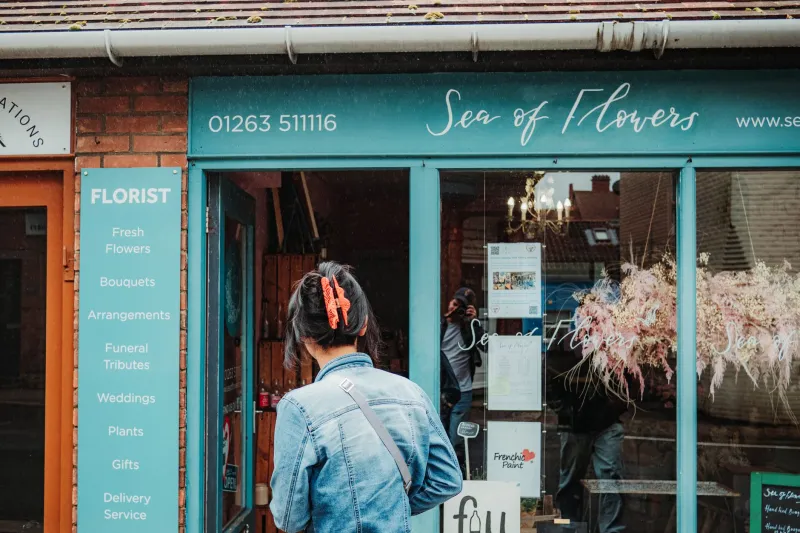
The best digital work being done in the UK right now isn't all coming from the same few square miles of central London. Some of it's happening in market towns, on high streets, in converted spaces where the coffee is decent and the thinking is sharper than the postcodes might suggest.
That's not a consolation prize. That's a genuine competitive advantage — and more clients are starting to notice.